Read full video transcriptShowHide
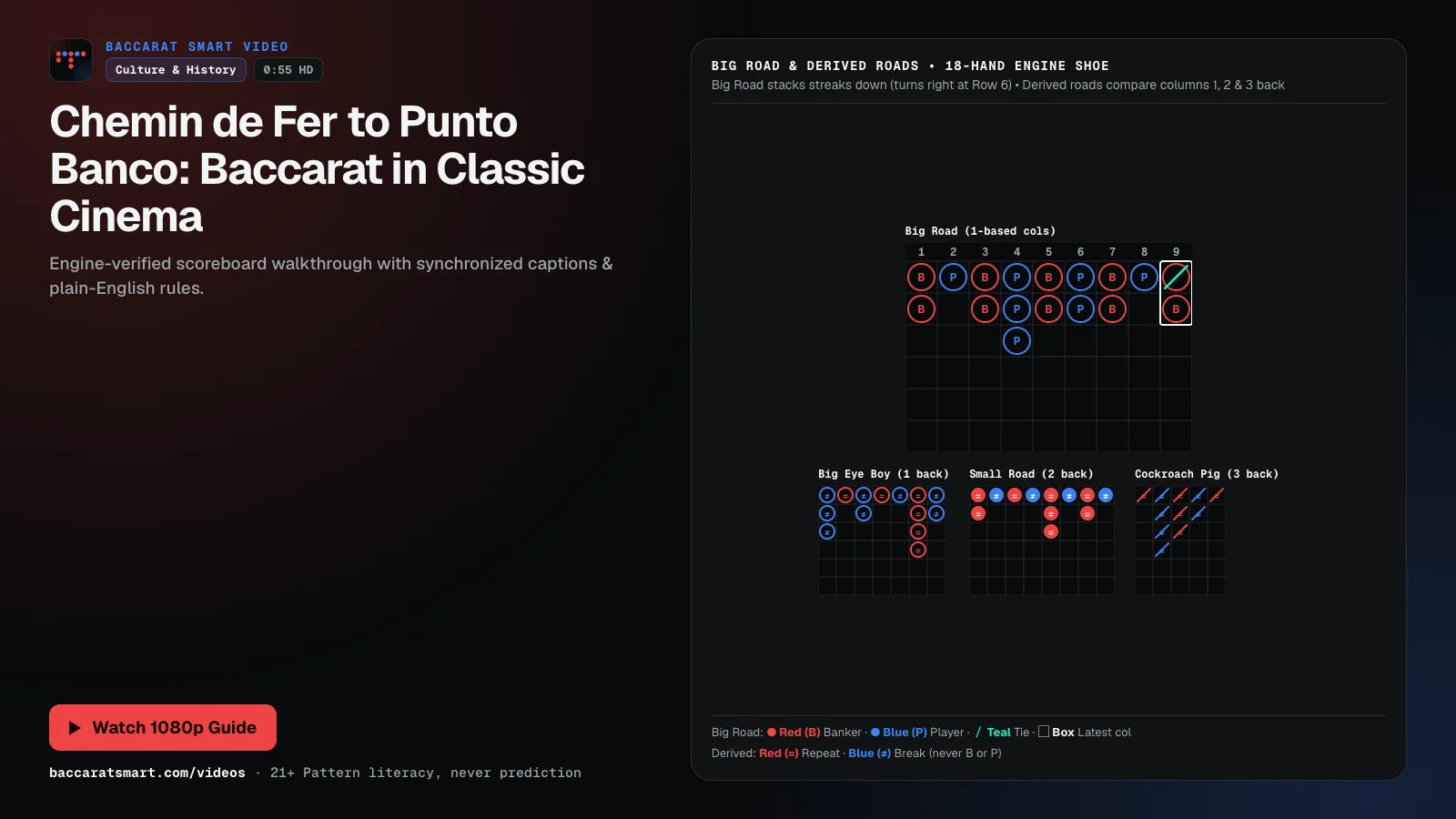
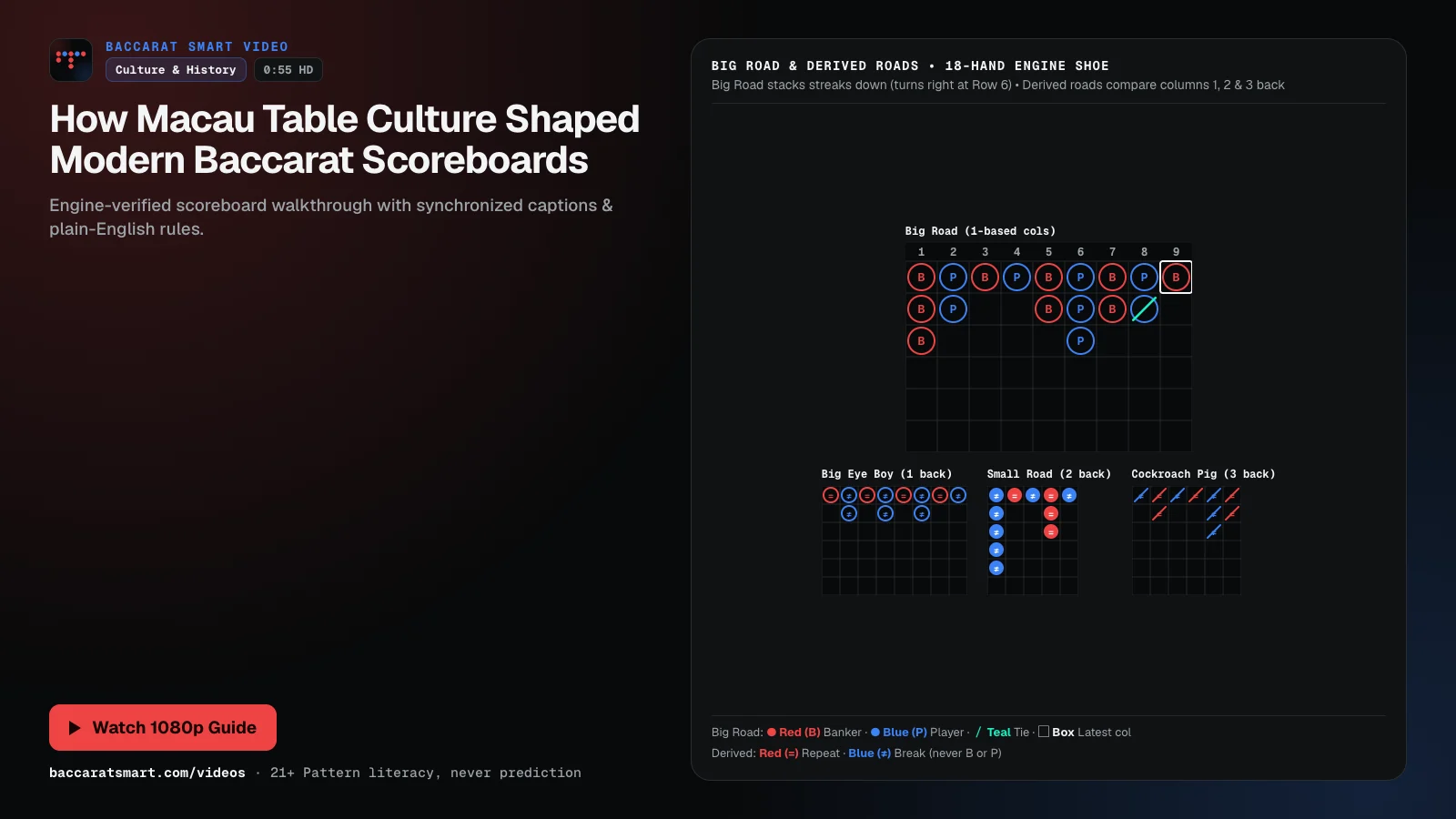
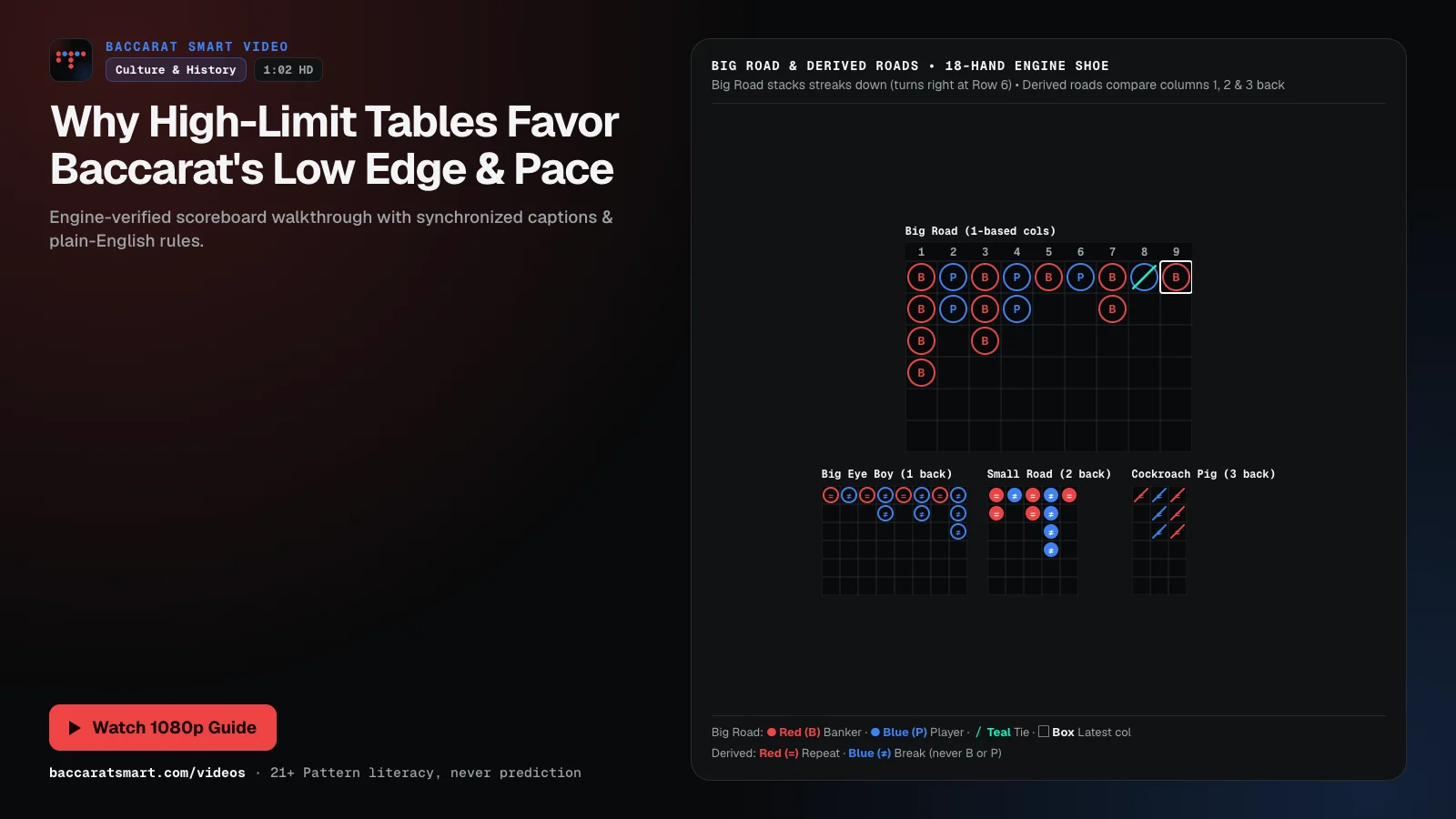
Baccarat's name comes from baccara — the Italian and French word for zero — reflecting that all 10s, Jacks, Queens, and Kings count as 0. In 19th-century France, two salon formats flourished: two-side Baccarat Banque and rotating-shoe Chemin de Fer. In the early 1950s, Buenos Aires and Havana casinos streamlined the game into house-banked Punto Banco, which Tommy Renzoni brought to Las Vegas in 1959. From the 1960s onward, Macau added card-squeeze culture and the five-road scoreboard shown on this 18-hand shoe — read more at /about. 21+.
Adults 21+ educational content only. Baccarat scoreboards record completed outcomes and never change the mathematical odds of the next hand. Review our Responsible Gambling policy.
History of Baccarat: European Sabots to Macau Scoreboards
A 60-second historical timeline tracing baccarat's evolution from European court tables (Baccara, Chemin de Fer, Baccarat Banque) to Havana's Punto Banco, Las Vegas Dunes, and five-road displays on an 18-hand shoe.
Practice What You Just Watched
Paired written guide: The Real History of Baccarat: Italy to Macau
Key takeaways from this video
- Four milestones: European zero-value court cards → French Chemin de Fer / Banque → 1950s Havana/Vegas house-banked Punto Banco → Macau five-road scoreboards.
- Automating the third-card tableau in Punto Banco allowed casinos to bank every wager simultaneously while offering a low 1.06% Banker / 1.24% Player edge.
- On shoe PBBPPBBBPPBBPBPBTB (18 hands, 10 Big Road columns), Big Eye Boy logs 15 marks, Small Road 13, and Cockroach Pig 11.
Interactive shoe sandbox (18 hands)Open interactive 4-road boardHide interactive board
Interactive 5-Road Sandbox · Bead Plate + Big Road + Derived Roads
Try this video's shoe live
Deal extra hands onto this shoe to watch the Bead Plate, Big Road, and all three casino derived roads react live. On derived roads, red = pattern repeating and blue = pattern breaking.
Bead Plate (Chronological)
Read ↓ then →Big Road (18 hands)
10 streak columnsBig Eye Boy
1 backSmall Road
2 backCockroach Pig
3 backHand #18 · Why the newest marks are red or blue
- Big Eye Boy: This bead is at Row 2. Column 9 stopped at Row 1, one row above → blue (≠).
- Small Road: This bead is at Row 2. Column 8 stopped at Row 1, one row above → blue (≠).
- Cockroach Pig: This bead is at Row 2. Column 7 stopped at Row 1, one row above → blue (≠).
Opens with this exact 18-hand sequence preloaded—and archives any shoe already on your board first.
Frequently asked questions about this walkthrough
Show 4 FAQsHide FAQs
- What was the key innovation that turned Chemin de Fer into Punto Banco?
- Making the casino bank both sides simultaneously and replacing discretionary player calls on 5 with one mandatory printed third-card tableau.
- When did Punto Banco debut on the Las Vegas Strip?
- November 1959 at the Sands / Dunes era on the Las Vegas Strip, introduced from Havana's Capri casino by Tommy Renzoni.
- How does historical Baccarat Banque ('deux tableaux') differ from Punto Banco?
- Baccarat Banque uses three decks and deals two separate Player hands (left and right tableaux) against one seated Banker who holds the bank until the shoe ends or funds run out.
- Where did Big Eye Boy, Small Road, and Cockroach Pig originate?
- All three derived roads were developed in Macau casinos from the 1960s onward to track column symmetry beneath the Big Road.